
Security Best Practices for AI Content Teams | Intelliewrite
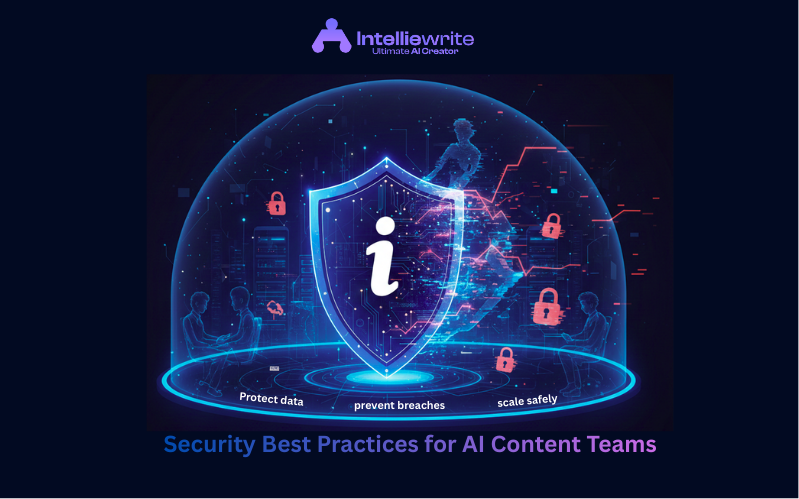
8 Fundamental AI Security Best Practices for Content Teams in 2026
AI is transforming content creation. With immense power comes an equally immense responsibility, particularly in security. In 2026, teams must adopt 8 fundamental AI security best practices to protect data, ensure compliance, and maintain smooth workflows. These practices form the foundation of any secure AI content strategy.
For marketing teams, agencies, and enterprises using AI tools, maintaining secure AI content workflows is essential. In this guide, we'll explore the core AI risks, the most impactful triggers, and practical best practices—while showing how Intelliewrite can strengthen your automated content operations.
Understanding the Scope of Enterprise AI Security for Content Teams
Securing AI goes beyond just protecting data—it covers the entire lifecycle of AI content creation. From input data collection and training datasets to generated outputs and storage, every stage presents potential vulnerabilities.
A strong AI security strategy ensures:
- Risk prevention across all AI processes
- Compliance with regulations like GDPR and SOC 2
- Smooth operational efficiency for content teams
By understanding the scope, teams can implement enterprise-level AI security measures that safeguard sensitive information while supporting rapid content creation.
Top AI Security Risk Triggers for Content Teams
Understanding where risks originate is the first step toward a robust AI content security strategy. Here are the top threats content teams face:
1. Data Breaches
Sensitive information, such as client data or proprietary marketing strategies, can be exposed if AI platforms are not properly secured. Data breaches can cause reputation damage, legal penalties, and loss of trust.
2. Information Bias and Discrimination
AI systems learn from the data they are trained on. Biased training data can lead to unfair or discriminatory content, harming brand reputation and violating compliance standards.
3. Training Data Manipulation
If training datasets are tampered with or manipulated, AI-generated content can produce inaccurate or harmful outputs. This is particularly risky for enterprises relying on AI for high-stakes marketing campaigns.
4. Resource Exhaustion
Poorly managed AI systems can consume excessive computational resources, leading to downtime or reduced performance for your content team.
By recognizing these risks, teams can implement enterprise AI content security measures that prevent disruptions and protect data integrity.
8 Relevant AI Security Best Practices to Protect AI Content Workflows
To minimize risk and maintain trust, content teams should follow these best practices for AI security:
1. Establish Data Security Policies Across the AI Lifecycle
Define clear rules for data access, storage, and processing. From collecting input data to generating AI outputs, a strong policy ensures consistent security and compliance.
2. Use Digital Signatures to Track Version History
Maintain a tamper-proof record of AI-generated content by using digital signatures. This helps track changes, identify unauthorized edits, and maintain accountability across teams.
3. Employ the Zero-Trust Principle
Assume that neither the user nor the system is automatically trustworthy. Implement authentication and verification for every access request to strengthen overall AI-driven content governance.
4. Implement Thorough Access Controls
Restrict permissions based on roles. For example, only senior content managers should approve sensitive AI outputs, reducing the chance of accidental or malicious misuse.
5. Dispose of Data Securely
Data retention policies should define how long AI training and output data are stored. Securely deleting unnecessary data prevents leaks and limits risk exposure.
6. Conduct Frequent Risk Assessments
Regular audits help identify vulnerabilities, from weak password policies to outdated AI frameworks. Assessments ensure your security measures evolve alongside your content operations.
7. Establish an Incident Response Plan
Prepare for potential security breaches with a step-by-step incident response plan. Quick, organized reactions minimize damage and maintain operational continuity.
8. Monitor and Log AI Systems
Constant monitoring and logging of AI activity provides visibility into system usage, performance, and anomalies. This supports compliance, improves security, and enables proactive problem-solving.
Using Intelliewrite simplifies many of these processes with built-in security features and enterprise-ready controls. Teams can scale their AI content operations without compromising safety or compliance.
Quick Do's and Don'ts for AI Security in Content Teams
To make these best practices even easier to remember, here's a quick Do's and Don'ts reference for your team.
Scale Secure AI Content Workflows with Intelliewrite
Scaling AI-written content teams comes with unique challenges. Without the right tools, even small oversights can turn into major vulnerabilities. Intelliewrite security features allow teams to:
- Maintain secure AI content workflows
- Track version history with digital signatures
- Apply role-based access for team members
- Conduct risk assessments directly within the platform
By integrating these practices into your Digital automated content strategy, your team can focus on creativity while keeping data, clients, and brand reputation safe.
Frequently Asked Questions About AI Security and Content Teams
Q1: What are the fundamental AI security best practices?
Encrypt data, control access, monitor AI systems, conduct risk assessments, and maintain compliance.
Encrypt data, control access, monitor AI systems, conduct risk assessments, and maintain compliance.
Q2: What are the SEO best practices for optimizing AI-generated content?
Use natural keywords, structured headings, internal links, meta optimization, and proofread for accuracy.
Use natural keywords, structured headings, internal links, meta optimization, and proofread for accuracy.
Q3: What content strategy best practice makes a great content flow?
Use a logical structure, smooth transitions, consistent tone, and actionable takeaways.
Use a logical structure, smooth transitions, consistent tone, and actionable takeaways.
Q4: How can Intelliewrite improve AI content security?
It provides role-based access, version tracking, monitoring, and compliance tools.
It provides role-based access, version tracking, monitoring, and compliance tools.
Q5: How often should AI risk assessments be conducted?
Regularly—ideally quarterly or when adding new AI workflows or tools.
Regularly—ideally quarterly or when adding new AI workflows or tools.
Q6: What is the zero-trust principle in AI security?
Don't trust anyone or any system; always check access requests.
Q7: How can content teams prevent data leaks in AI tools?
Use secure storage, controlled access, encrypted data, and proper disposal practices.
Use secure storage, controlled access, encrypted data, and proper disposal practices.
Q8: Can Intelliewrite help with compliance standards?
Yes, it supports GDPR, SOC 2, and enterprise security guidelines.
Yes, it supports GDPR, SOC 2, and enterprise security guidelines.
Q9: What is the easiest way to monitor AI systems for security?
Enable logging, alerts, and real-time monitoring features within your AI platform.
Enable logging, alerts, and real-time monitoring features within your AI platform.
Q10: Why is version tracking important for AI content?
It ensures accountability, prevents unauthorized edits, and maintains content integrity.
It ensures accountability, prevents unauthorized edits, and maintains content integrity.
Implement Enterprise AI Security Best Practices for Content Teams
AI-powered content creation has revolutionized the way teams produce marketing materials, blog posts, and enterprise content. Yet, AI security risks remain a critical concern for any content team. By understanding the most impactful threats—such as data breaches, bias, and resource exhaustion—and implementing the 8 best practices, teams can ensure secure AI workflows.
Platforms like Intelliewrite make it easy to manage security, compliance, and governance at scale. With the right strategy, your team can create, optimize, and publish AI-generated content safely, efficiently, and confidently.
Strengthen your AI content security today with Intelliewrite and stay ahead in the era of intelligent content creation.