


AI Multilingual SEO: Rank in Every Language with Intelliewrite
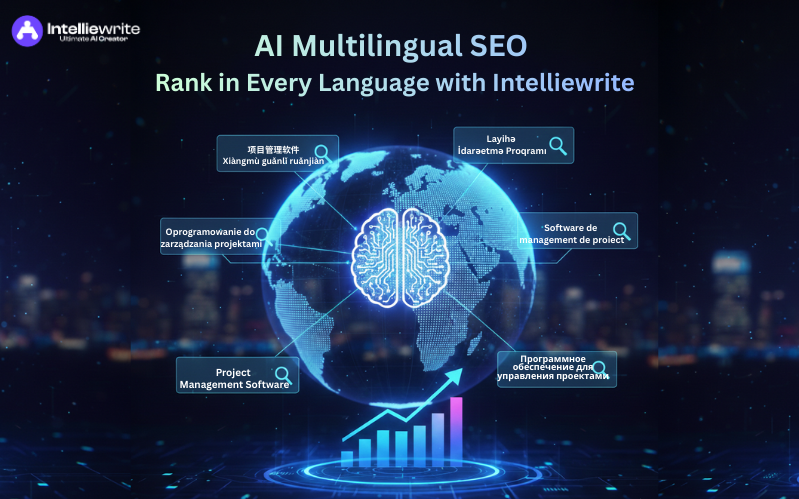
AI Multilingual SEO: Rank Your Website in Every Language with Intelliewrite
Struggling to get your website noticed in international markets? Expanding globally may seem simple: translate your pages and hit publish, but for many businesses, perfectly translated content still fails to rank.
The reason is clear: search engines prioritize intent over language. A user in Spain, Germany, or Brazil might be looking for the same solution, but they search, think, and evaluate offers differently. Simply translating text creates pages people can read — not pages they can discover.
With AI-powered tools like Intelliewrite, you can go beyond basic translation, optimizing content to align with local search behavior and achieving visibility across multiple markets.
What Is Multilingual SEO?
Multilingual SEO is the process of optimizing your website so search engines can show the correct language version of your content to the right audience in the right country.
Translation alone isn't enough.
It combines:
- Technical signals (language targeting)
- Local keyword research
- Cultural adaptation
- Content optimization
- Search intent matching
The Goal
Make each visitor feel the page was originally written for them — and make search engines confident about showing it.
Multilingual SEO vs Translation
Why Multilingual Websites Fail to Rank
Many businesses invest heavily in translation yet see no traffic from other countries.
The issue isn't language — it's relevance signals.
The issue isn't language — it's relevance signals.
Common Problems
1. Direct Keyword Translation
People rarely search for literal equivalents.
Example:
- US: "project management software."
- France: "team collaboration tool."
- Japan: might search feature-based queries instead
2. Duplicate Content Confusion
Search engines may view your pages as duplicate content and ignore them.
3. Wrong Targeting Signals
Without proper structure, Google cannot determine:
- which country a page is for
- which version to rank
- which one to prioritize
4. Competing Versions of the Same Page
Different language pages compete against one another rather than ranking together.
Signs Your Multilingual SEO Is Broken
- Pages indexed, but no impressions
- Traffic only from the original country
- One language ranking globally
- Wrong country visitors landing on pages
- Translated pages ranking on page 5+
How Search Engines Handle Multiple Languages
Search engines don't automatically understand your website structure.
They rely on signals to determine language and location targeting.
They rely on signals to determine language and location targeting.
Key Elements They Look For
- Language indicators
- Regional relevance
- Local keyword usage
- Consistent internal linking
- Unique value per region
What Search Engines Try To Do
They aim to present the most useful version of the content to each user.
For example:
A Canadian user searching in French expects a different page than a user in France — even if both speak French.
A Canadian user searching in French expects a different page than a user in France — even if both speak French.
Simplified Ranking Logic
If your site lacks these signals, the engine will rank only one version — usually your original language.
How Translations Affect SEO
Translation alone improves readability but not discoverability.
Why Translated Content Often Doesn't Rank
- Keywords don't match search habits
- Tone feels unnatural
- Meta titles lose impact
- Search intent changes across regions
Example Problem
A literal translation might be grammatically correct but semantically wrong for search engines.
Instead of matching:
"How people search."
It matches:
"How words convert."
What Proper Localization Requires
- Market-specific keyword selection
- Context adaptation
- Title optimization per country
- Cultural phrasing adjustments
SEO Impact Comparison
How to Do Multilingual SEO with Intelliewrite
Below is a practical workflow to scale global rankings using AI instead of manual rewriting.
Step 1 — Start With a Primary Article
Create one high-quality article in your main language.
Focus on:
- clarity
- topic depth
- structured headings
- search intent
This becomes your source content.
Step 2 — Detect International Opportunities
Intelliewrite analyzes the topic and identifies:
- countries with demand
- search variations
- alternate keyword meanings
- user expectations
Instead of translating, it discovers how people actually search.
Step 3 — Generate Localized Versions
The system rewrites content to match each market.
It adapts:
- terminology
- examples
- phrasing
- search queries
- content angles
Not word-for-word — but meaning-for-meaning.
Step 4 — Optimize SEO Elements Automatically
Each version receives optimization:
- titles
- meta descriptions
- headings
- semantic entities
So every page becomes independently rankable.
Step 5 — Align Internal Linking
Intelliewrite connects language pages correctly, so search engines understand relationships rather than competition.
Step 6 — Publish and Measure
Start with key pages:
- homepage
- core landing pages
- top blog articles
Track impressions by country and scale based on performance.
Workflow Overview
Why Intelliewrite Is the Best Choice for Multilingual SEO
Traditional multilingual workflows require:
- translators
- SEO specialists
- localization experts
- content editors
That makes global expansion slow and expensive.
AI changes the model from translation management to content intelligence.
Key Advantages
Intent-Aware Writing
Creates content based on how users search, not just what words mean.
Market-Specific Optimization
Each language version can rank independently.
Consistent Branding
Terminology stays aligned across countries.
Scalable Growth
Turn one article into multiple ranking assets.
Practical Benefits
- Faster international traffic
- Lower content cost
- Better ranking stability
- Easier global expansion
When It Helps Most
- SaaS expanding globally
- E-commerce entering new markets
- Agencies managing multiple regions
- Startups testing international demand
Wrapping Up
Multilingual SEO is not a translation task — it's a relevance task.
Search engines reward pages that match local expectations, not just local language.
That's why many translated websites never gain international visibility.
That's why many translated websites never gain international visibility.
By combining localization, search intent analysis, and automated optimization, AI tools like Intelliewrite turn a single piece of content into a global ranking system.
Instead of rewriting content repeatedly, you create it once and adapt it intelligently — allowing your website to rank naturally in every language and every market.