AI Content Editing Checklist: From Draft to Publish-Ready
AI Content Editing Checklist: From Draft to Publish-Ready
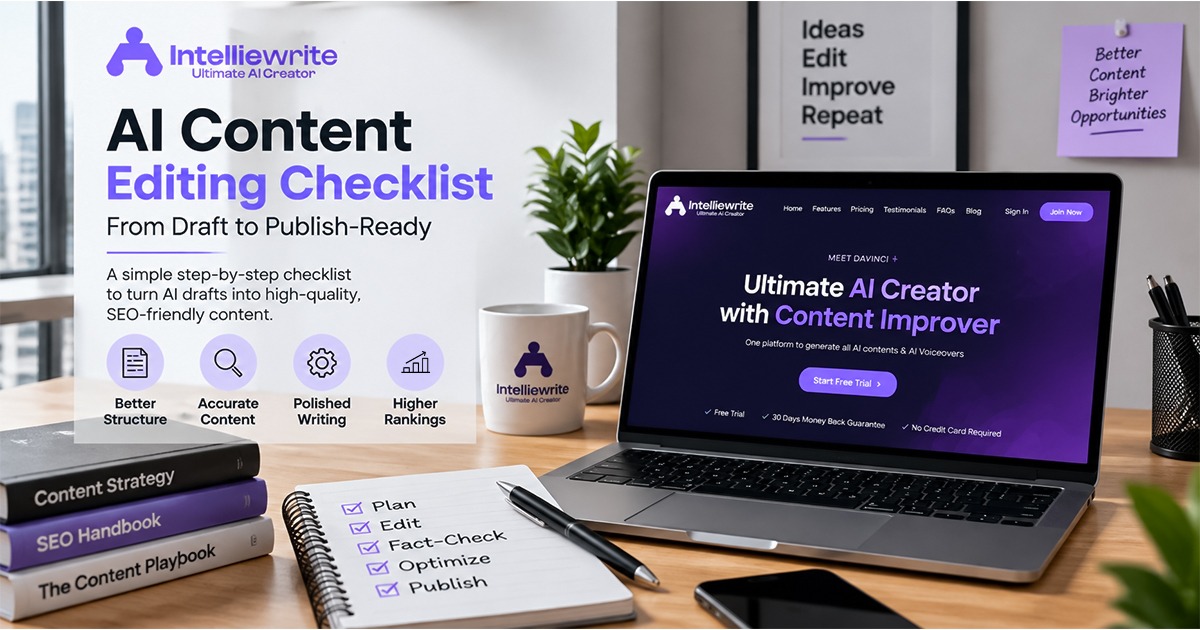
An AI-generated first draft and a publish-ready article are not the same thing, no matter how polished the draft reads on the first pass. The gap between them is a specific, repeatable editing process — not a vague "add some personality" instruction. This checklist breaks that process into concrete steps, moving from structural issues down to line-level fixes, so nothing gets missed between generation and publish.
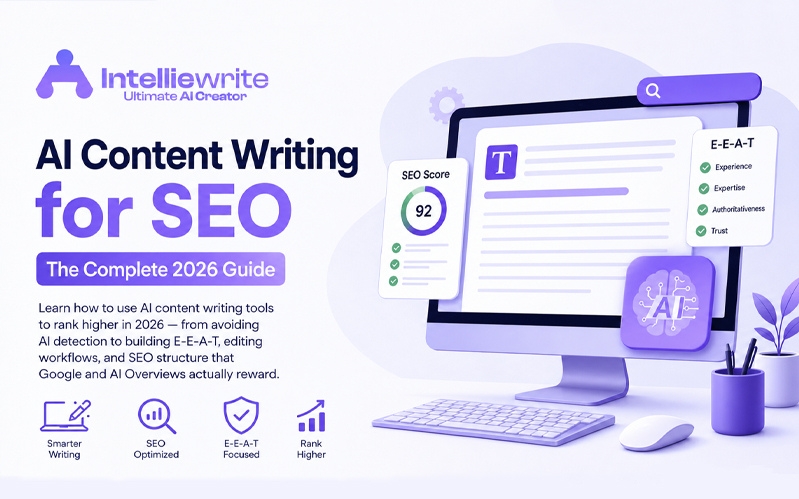
This is the editing layer referenced throughout our AI content writing for SEO guide — use it as the final gate before anything AI-assisted goes live.
Quick-Reference: The Six Editing Stages

Step 1: Structural Review (Before Touching a Sentence)
Fix structure before prose — rewriting sentences in a section that gets cut later wastes the edit.
- Does the piece answer the core search intent in the first 100 words?
- Are headings phrased as specific questions or claims, not vague labels?
- Is there a logical progression, or does the draft repeat the same point in multiple sections?
- Are there sections that don't serve the target reader and should be cut entirely?
- Is there a clear FAQ section targeting real long-tail search phrasing?
Step 2: Add What AI Couldn't Generate
This is where the piece moves from generic to genuinely useful — see the full breakdown in our E-E-A-T checklist for AI-generated content.
- Add at least one specific example, number, or firsthand detail per major section
- Replace generic phrasing ("many businesses," "it's important to") with concrete claims
- Insert an opinion, recommendation, or contrarian point that required real judgment to form
- Confirm the piece includes something a competitor couldn't paste in unchanged
Step 3: Fact-Check Every Verifiable Claim
- Trace every statistic back to a real, citable source
- Confirm dates, names, and figures are current, not outdated training-data artifacts
- Remove or rewrite any claim that can't be verified
- Check that quoted or referenced sources are linked, not just named
Step 4: Line-Level Editing for Voice and Rhythm
- Cut sentences that restate the heading instead of adding new information
- Vary sentence length — break up runs of same-length sentences
- Remove hedge-word stacking ("can," "may," "could," "it's worth noting") where a direct claim is more accurate
- Read the piece aloud (or have a tool read it back) — awkward AI phrasing is easier to catch by ear than by eye
- Confirm the tone matches brand voice guidelines, not a generic neutral register
Step 5: SEO and Technical Formatting
- Title tag and H1 are aligned and both include the primary keyword naturally
- Meta description is written to earn the click, not just describe the content, and fits within standard length limits
- Internal links point to genuinely relevant pages — pillar content, related clusters, and relevant product pages — placed contextually within sentences, not appended as a list
- At least one authoritative outbound link supports a claim that benefits from external verification
- Images have descriptive alt text, and any data is presented in a scannable format (table, list) rather than dense paragraphs
- Schema markup (Article, FAQPage, Author) is applied
Step 6: Final Pre-Publish Check
- Byline links to a real author bio with relevant credentials
- Publish date is current and accurate
- A second person has reviewed the piece — self-editing catches structural issues but misses more line-level problems than a fresh set of eyes
- The piece passes the swap test: could a direct competitor drop their brand name in without changing a sentence? If yes, it's not ready.
Why This Process Matters More Than Any Single Tool
No AI writing tool — regardless of what its marketing claims — produces publish-ready content without this layer of editing. The tools that are genuinely useful for SEO work are the ones that make this editing process faster, not the ones that claim to skip it. Treating AI output as a fast first draft, and this checklist as the non-negotiable second half of the process, is the difference between content that ranks and content that adds to the pile of generic material search engines are actively working to filter out.
Frequently Asked Questions
How long should editing an AI draft take compared to writing from scratch?
It varies by content type and how well the initial prompt was structured, but editing an AI draft through this full checklist is typically faster than writing from scratch — the time savings come primarily from Step 1 (structure) already being done, freeing editing time for Steps 2 and 3, which are the highest-value stages.
Can this checklist be partially skipped for lower-stakes content?
Steps 3 (fact-checking) and 6 (final pre-publish check) shouldn't be skipped for any published content. Steps 2 and 4 can be lighter-touch for very low-visibility content (internal descriptions, minor product variants) where the ranking and trust stakes are lower.
What's the single highest-impact step in this checklist?
Step 2 — adding specific, firsthand detail. It's the step most directly tied to both E-E-A-T signals and the difference between content that reads as generic versus genuinely useful.
Should the same person who reviewed the AI draft also write the outline?
Not necessarily, but having a second reviewer at the final stage (Step 6) consistently catches issues the original editor misses, simply because they're reading the piece with fresh context.