


Localization Workflow Using Intelliewrite
Localization Workflow Using Intelliewrite: Streamline AI-Powered Multilingual Content
Are you truly connecting with global audiences or simply translating content and hoping for results? In an increasingly globalized world, effective localization is essential for brands aiming to resonate with diverse audiences. Explore the localization workflow using Intelliewrite, a powerful tool that simplifies AI content creation for multilingual strategies. Readers will discover the significance of content localization, the challenges faced in traditional workflows, and how Intelliewrite can streamline the entire process.
Introducing Localization Workflow in AI Content Creation
A localization workflow is a structured process used to adapt content for different languages, regions, and cultural contexts. It ensures that messaging remains consistent while being tailored to local audiences.
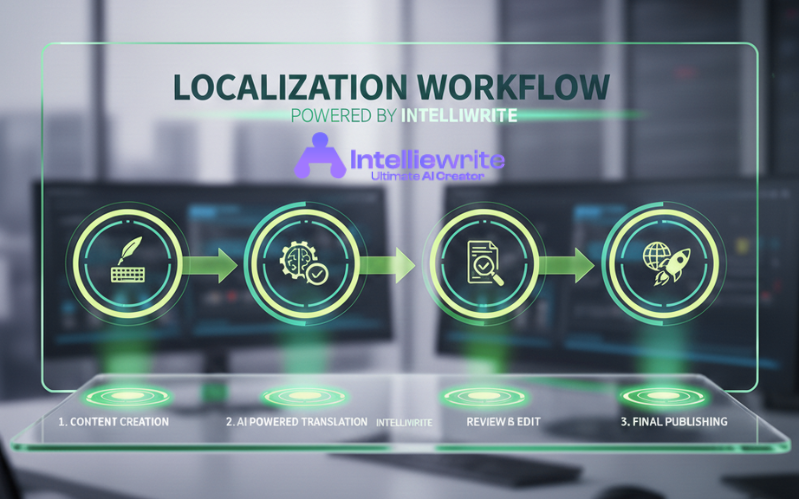
Key steps in a localization workflow typically include:
- Content Creation: Developing original content that is ready for localization.
- Translation: Converting the content into the target language.
- Localization: Adapting the content to suit cultural nuances.
- Review and Quality Assurance: Ensuring accuracy and cultural relevance.
- Publishing: Distributing the localized content across relevant channels.
By leveraging AI tools, businesses can automate and optimize these steps, leading to a more efficient localization workflow.
Why Content Localization Matters in 2026
Content localization refers to the process of adapting content to meet the linguistic and cultural needs of a specific audience. As we look toward 2026, the importance of content localization in global content marketing becomes increasingly evident.
Effective content localization enables brands to:
- Enhance User Experience: Tailored content resonates more deeply with local audiences.
- Improve SEO Performance: Localized content enhances visibility in search engines.
- Boost Engagement: Culturally relevant content leads to higher engagement rates.
As more businesses expand into international markets, the demand for multilingual content strategies will continue to rise. In 2026, companies that prioritize content localization will likely outperform their competitors.
Challenges in Traditional Localization Workflows
Despite the benefits of localization, traditional workflows often face numerous challenges that can hinder efficiency and effectiveness. Some of the most prevalent issues in traditional localization workflows include:
- Manual Translation Issues: Relying on human translators can lead to inconsistencies and errors, especially with large volumes of content.
- Content Workflow Inefficiencies: Disjointed processes can slow down the time-to-market for localized content.
- Translation Bottlenecks: Delays in translation can disrupt marketing campaigns and product launches.
These challenges underscore the need for a more efficient approach to localization, which is where Intelliewrite comes into play.
How Intelliewrite Streamlines the Localization Workflow
Intelliewrite is an AI-powered tool designed to enhance the localization workflow for content creators. By integrating advanced technology into the localization process, we offer several key advantages.
Automated Translation and Adaptation
One of the standout features of this AI tool is its ability to automate translation and adaptation processes. This automation not only speeds up the workflow but also ensures consistency across different languages and formats.
Contextual Understanding
We utilizes advanced algorithms to understand the context of the content, allowing for more accurate translations that consider cultural nuances. This contextual understanding is crucial for effective localization, as it helps avoid common pitfalls associated with literal translations.
Collaboration and Integration
The platform facilitates collaboration among team members, enabling seamless communication between content creators, translators, and marketers. We also integrates with other tools, allowing for a cohesive workflow that minimizes disruptions.
Quality Assurance Features
Our Ai tool includes built-in quality assurance features that help identify errors and inconsistencies in localized content. This ensures that the final output is not only accurate but also culturally relevant, enhancing the overall user experience.
Step-by-Step Localization Workflow Using Intelliewrite
To effectively utilize Intelliewrite in your localization efforts, follow these structured steps:
Step 1: Content Assessment
Begin by identifying which pieces of content require localization. This could include website pages, marketing materials, product descriptions, or user manuals. Use Intelliewrite’s analytics tools to determine which content performs best and should be prioritized for localization.
Step 2: Setting Up Your Localization Management System
Integrate Intelliewrite with your existing localization management system (LMS). This ensures seamless communication between your content repositories and the localization platform. Configure the system to manage workflows, track progress, and assign tasks to team members.
Step 3: Automated Translation
Utilize Intelliewrite’s AI translation capabilities to convert your content into the target languages. The platform supports multiple languages and dialects, ensuring that your content is accurately translated while maintaining cultural context. Review the initial translations for quality assurance, making adjustments as necessary.
Step 4: Cultural Adaptation
Once the content is translated, focus on cultural adaptation. This involves modifying phrases, images, and references to ensure they resonate with the local audience. Multilingual content AI provides tools to assist in this process, offering suggestions based on cultural nuances and preferences.
Step 5: Quality Assurance
Implement a quality assurance process to review the localized content. This includes proofreading, editing, and testing the content in its final format. Use Intelliewrite’s collaboration features to involve native speakers or localization experts in the review process.
Step 6: Publishing and Distribution
After finalizing the localized content, publish it across your chosen channels. An AI localization tool enables easy integration with content management systems, ensuring that your localized content is readily available to your target audience. Monitor the performance of the content post-publishing to assess effectiveness.
Step 7: Continuous Improvement
Localization is an ongoing process. Use Intelliewrite’s analytics to gather data on how your localized content performs. Analyze metrics such as engagement rates, conversion rates, and user feedback. This information will help refine your localization strategy and improve future workflows.
Benefits of Using Intelliewrite for Localization for Multilingual SEO
AI-powered localization software is designed to enhance the localization workflow through automation and intelligent content management. Here are some key benefits:
- AI-Powered Translation: Leverage AI to automate translation, reducing time and costs associated with manual processes.
- Multilingual SEO Optimization: Ensure that your content is optimized for search engines in multiple languages, enhancing visibility and reach.
- Scalability: Easily scale your content localization efforts to meet the demands of global markets.
- Collaboration Tools: Facilitate teamwork among content creators, translators, and marketers, ensuring a cohesive approach to localization.
- Data-Driven Insights: Utilize analytics to refine your localization strategy based on performance metrics.
Best Practices for Effective Localization with Intelliewrite
To maximize the benefits of using Intelliewrite in your localization workflow, consider these best practices:
1. Involve Local Experts
Engage native speakers or localization experts in the process to ensure cultural relevance and accuracy in translations. Their insights can significantly enhance the quality of your localized content.
2. Maintain a Consistent Brand Voice
Ensure that your brand voice remains consistent across all languages. Use Intelliewrite’s style guides and glossaries to maintain terminology and tone throughout your content.
3. Optimize for Multilingual SEO
Incorporate multilingual SEO strategies into your localization workflow. Conduct keyword research for each target language and optimize your content accordingly to improve search visibility.
4. Test Localized Content
Before launching localized content, conduct user testing to gather feedback on its effectiveness. This will help identify any areas that may need adjustment before full-scale distribution.
5. Leverage Data Analytics
Utilize Intelliewrite’s analytics capabilities to track the performance of your localized content. Analyze user engagement, conversion rates, and other key metrics to inform future localization efforts.
Challenges in Localization and How to Overcome Them
While localization offers numerous benefits, it also presents challenges. Here are some common obstacles and strategies to overcome them:
1. Language Nuances
Different languages often have unique nuances and idioms that can be challenging to translate accurately. To address this, leverage Intelliewrite’s AI capabilities to provide context-aware translations and involve native speakers in the review process.
2. Cultural Sensitivity
What works in one culture may not resonate in another. Conduct thorough research on cultural norms and values to ensure your content is appropriate and well-received. AI-powered localization software can assist by offering suggestions based on cultural context.
3. Technical Limitations
Sometimes, technical limitations can hinder the localization process. Ensure that your technology stack is compatible with Intelliewrite and other tools in your workflow. Regularly update your systems to avoid compatibility issues.
4. Quality Control
Maintaining quality across multiple languages can be challenging. Establish a robust quality assurance process and utilize Intelliewrite’s collaboration tools to involve multiple stakeholders in the review process.
Transform Your Localization Strategy Today with Intelliewrite
A well-structured localization workflow is essential for brands aiming to grow in global markets. By using an AI content automation platform, businesses can automate translation, maintain cultural relevance, and optimize multilingual content for better visibility.
Businesses that implement an AI-powered localization workflow using Intelliewrite gain scalability, efficiency, and a strong international SEO advantage. Start optimizing your multilingual content strategy today.
Frequently Asked Questions
What is a localization workflow?
A localization workflow is the systematic process of adapting content for different languages and cultures, ensuring effective communication and engagement with diverse audiences.
How does Intelliewrite assist in localization?
Intelliewrite automates translation and cultural adaptation processes, allowing businesses to efficiently create multilingual content while maintaining quality and consistency.
What are the benefits of AI-powered localization?
AI-powered localization offers speed, cost-effectiveness, consistency, and scalability, making it easier for businesses to manage large volumes of content across various markets.
What challenges might I face in localization?
Common challenges include inaccurate translations, cultural misalignment, and integration issues with existing systems. Solutions involve human review and collaboration with local experts.
How can I improve my localization process?
To enhance your localization process, assess your content, utilize AI tools effectively, engage local experts, and monitor performance through analytics.