
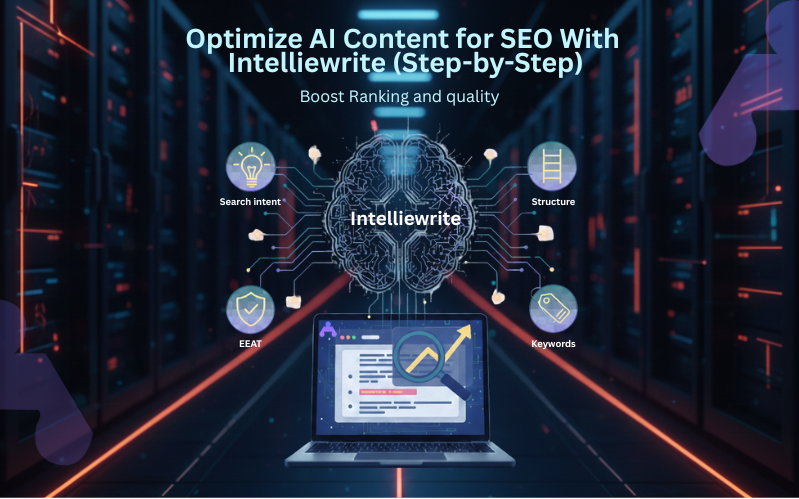
Optimize AI Content for SEO With Intelliewrite (Step-by-Step)
How to Optimize AI-Generated Content for SEO Using Intelliewrite (10-Step Guide)
Are you unsure if AI-generated content can rank on Google? In today's digital landscape, many marketers and bloggers are turning to AI writing tools to generate content quickly. However, the challenge remains: how can you optimize this content for SEO effectively? In this article, we'll delve into the intricacies of optimizing AI content for SEO using the Intelliewrite platform, ensuring your content not only ranks well but also meets Google's quality standards.
Yes, AI-generated content can rank on Google if it's well-optimized and aligns with SEO best practices. This guide outlines essential steps to achieve this.
Table of Contents
- Understanding AI Content and SEO
- Can AI Content Rank on Google?
- Common SEO Mistakes in AI Content
- 10-Step Workflow to Optimize AI Content
- Expert Insights
- Frequently Asked Questions
- Conclusion
Understanding AI Content and SEO
AI-generated content has become a powerful tool for marketers and bloggers—especially for fast blog writing. However, Google has specific ranking preferences. For AI-generated content to rank favorably, it must be original, helpful, and provide value to readers. Google's latest algorithms emphasize quality over quantity, meaning that simply producing large volumes of content won't suffice.
Creating high-quality content with AI tools like Intelliewrite involves understanding search intent and crafting content that resonates with readers. When AI writing tools generate content, the focus should be on ensuring it meets the target audience's needs.
Can AI Content Rank on Google? (The Real Answer)
Yes, AI content can rank — because Google evaluates content based on quality, not on the tool used.
Google prefers content that:
- answers the search query clearly
- matches user intent
- provides depth, examples, and absolute value
- is organized and easy to read
- shows trust signals (EEAT)
When AI content fails
AI-generated content usually fails to rank when it:
- sounds robotic or repetitive
- provides generic and surface-level information
- misses search intent
- lacks structure and clarity
- does not provide proof, examples, or expertise
Pro Tip: AI is best used as a drafting assistant. A human SEO strategy must shape the final quality.
Common SEO Mistakes in AI Content
Even with good AI tools, these SEO mistakes can destroy rankings:
- Ignoring search intent: If users want "steps" and you deliver only "definitions," they'll bounce.
- Keyword stuffing: Overusing keywords makes content unnatural and may reduce trust.
- Thin content: Many AI articles look long but contain low-value filler.
- No originality: Google doesn't reward content that repeats what everyone else says.
- Weak EEAT: No experience, no trust, no authority = lower potential for a higher ranking.
- Poor readability: Walls of text, long paragraphs, and complex sentences harm engagement.
10-Step Workflow to Optimize AI Content
To effectively optimize AI-generated content, follow this detailed 10-step workflow:
- Identify Search Intent: Understand what the audience is searching for. Use tools like Google Trends or Answer The Public to gather insights.
- Create a Content Outline: Structure your content logically using headings and subheadings to improve scanability.
- Optimize Headings: Incorporate primary and secondary keywords in your headings. This helps search engines and readers understand the content hierarchy.
- Strategic Keyword Placement: Introduce your primary keyword within the first 100 words and sprinkle related terms throughout the content.
- Use Semantic Terms: Enhance your content by including synonyms and related phrases to improve relevance.
- Incorporate E-E-A-T: Demonstrate your experience and expertise by sharing personal insights and citing authoritative sources.
- Add Internal Links: Use internal linking to guide readers to related content on your site. This improves user experience and enhancesSEO.
- Include FAQs: Anticipate users' questions and provide clear, concise answers to improve engagement and dwell time.
- Enhance Readability: Use short paragraphs, bullet points, and varied sentence structures to make your content digestible.
- Finalize with an On-Page Checklist: Before publishing, ensure your content meets all on-page SEO criteria, including meta tags and image alt texts.
Industry Insights (What SEO Experts Agree On)
AI-generated content can rank on Google, but only when it's optimized for helpfulness. Experts agree that search intent, firm structure, EEAT signals (experience + trust), and human editing are essential. AI should be used for drafting — while humans refine the content to make it more transparent, more valuable, and SEO-ready.
Frequently Asked Questions
Can AI-generated content rank on Google?
Yes, AI-generated content can rank on Google if it's optimized for SEO and meets quality standards.
What are the best techniques for optimizing AI content?
Best practices include understanding search intent, strategically placing keywords, and demonstrating E-E-A-T.
How do I improve the readability of AI-generated content?
Enhance readability by using short paragraphs, bullet points, and varied sentence structures.
What common mistakes should I avoid in AI content?
Avoid keyword stuffing, ignoring search intent, and neglecting to demonstrate E-E-A-T.
How important are internal links in AI content?
Internal links are crucial for improving user experience and SEO by guiding readers to related content.
Is it necessary to write FAQs in SEO content?
Yes, including FAQs can enhance engagement and help address user queries effectively.
How can I ensure my AI content is exceptional?
To ensure uniqueness, always add personal insights, examples, and citations from authoritative sources.
Conclusion
Optimizing AI-generated content for SEO is a multifaceted process that requires attention to detail, understanding of audience needs, and adherence to Google's guidelines. By following the 10-step workflow outlined in this article, you can leverage tools like Intelliewrite effectively, ensuring your content not only ranks but also resonates with readers. Start optimizing today to enhance your online visibility!