
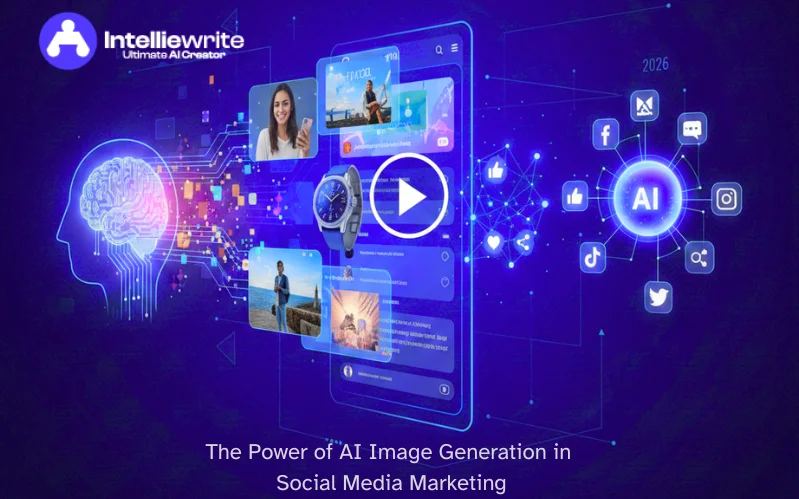
The Power of AI Image Generation in Social Media Marketing
What if one image could decide whether your brand gets noticed or ignored? In the fast-paced world of digital marketing, a single second is all you have to stop a user from scrolling past your brand. Visuals have always been the heartbeat of social platforms, but the demand for high-quality, original imagery has outpaced the capacity of most creative teams.
Enter AI image generation in social media marketing. What was once a futuristic concept is now a core pillar of modern visual marketing strategies. From photorealistic product shots created in seconds to surrealistic art that captures the imagination, AI is leveling the playing field for small businesses and enterprise brands alike.
At Intelliewrite, we believe that staying ahead of the curve means embracing these AI content creation tools to drive real business results.
Understanding AI Image Generation
AI image generation refers to the use of artificial intelligence algorithms to create images from scratch or modify existing ones. These technologies can produce high-quality visuals that resonate with target audiences, making them a valuable asset in social media marketing. The most common techniques include Generative Adversarial Networks (GANs), neural style transfer, and deep learning models that interpret and synthesize visual elements.
Why AI-Generated Visuals are Dominating Social Media
The shift toward AI-generated visuals isn't just about novelty; it’s about solving the three biggest pain points in social media management: time, money, and creativity. By using sophisticated neural networks, marketers can now input simple text prompts and receive high-resolution images tailored to their brand’s specific aesthetic.
1. Exponential Increase in Engagement
Social media algorithms prioritize content that keeps users on the app. Unique, eye-catching AI visuals often outperform generic stock photos because they offer something "new" to the eye.
- Fact: Posts with custom visuals receive 94% more views than those without. AI allows you to create custom visuals for every single post, not just the big campaigns.
2. Rapid Content Creation at Scale
The "always-on" nature of platforms like Instagram, TikTok, and LinkedIn requires a constant stream of content. Traditional photoshoots can take weeks to plan and execute. With content creation with AI, you can generate a week's worth of visual assets in a single afternoon.
3. Unmatched Cost Efficiency
Professional photography, studio rentals, and graphic designers are expensive. While AI won't replace human creativity, it drastically reduces the "busy work." Instead of paying for hundreds of individual stock photos or expensive minor edits, brands can utilize social media marketing tools driven by AI to handle the bulk of their creative output.
4. Flawless Brand Consistency
Maintaining a consistent "vibe" is crucial for brand recall. AI tools allow you to save specific "styles" or "seeds." Whether you want a neon-futuristic look or a soft, minimalist aesthetic, AI ensures that every image across your Facebook, Pinterest, and Twitter looks like it belongs to the same family.
Top Tools for AI Image Generation in 2026
To implement effective AI marketing strategies, you need the right tech stack. Here are the leading platforms currently transforming the industry:
- Intelliewrite: Designed for modern marketers, Intelliewrite combines AI image generation with content strategy, helping brands create scroll-stopping visuals that align perfectly with captions, campaigns, and overall brand messaging.
- DALL-E 3 (OpenAI): Integrated with ChatGPT, it is incredibly user-friendly and understands complex instructions better than almost any other tool.
- Adobe Firefly: Built specifically for creators, it integrates directly into Photoshop and Illustrator, making it the safest choice for commercial use due to its "commercially safe" training data.
- Canva AI: Perfect for social media managers who need a "one-stop shop." It allows you to generate an image and immediately drop it into a post template.
How AI Image Generation Boosts Social Media Engagement
High-quality visuals are key to capturing attention on social media platforms. AI-generated images can significantly enhance engagement rates through various strategies:
1. Creating Unique and Relevant Content
AI tools can analyze trends and user preferences to generate visuals that resonate with target audiences. For example, a fashion brand can use AI to create images of clothing items in styles that are currently trending, ensuring that their content remains relevant and appealing.
2. Personalization at Scale
With AI, brands can create personalized visuals for different segments of their audience. For instance, a travel agency could generate images of vacation destinations tailored to specific demographics, such as family-friendly resorts for parents or adventure trips for young adults. This level of personalization enhances user experience and increases engagement.
3. A/B Testing Visuals
AI-generated images can be utilized for A/B testing, allowing marketers to experiment with different visuals to determine which resonates best with their audience. By analyzing engagement metrics, brands can refine their strategies to optimize performance continually.
Best Practices for High-Impact AI Visuals
- Master the Prompt: Be specific. Instead of "a dog," try "a cinematic wide-shot of a golden retriever wearing sunglasses on a sunny beach, 8k resolution, vibrant colors."
- Edit and Refine: Never post a "raw" AI image without checking for glitches (like extra fingers or warped text). Use tools like Photoshop to polish the final result.
- Humanize the Content: Use AI to create the art, but let humans write the captions. Authenticity in voice is more important than ever.
- Stay Updated: AI models update almost monthly. What worked on Midjourney v5 may look dated compared to v6 or v7.
Challenges and Ethical Considerations
While the power of AI is immense, social media managers must navigate several challenges:
- Copyright and Ownership: Currently, the legal landscape regarding the copyright of AI-generated art is evolving. Always check the Terms of Service of your chosen tool.
- Deepfakes and Misinformation: Avoid creating images that could mislead the public. Transparency is key—many brands now use hashtags like #AIArt or #GeneratedWithAI.
- Bias in AI: AI models are trained on existing internet data, which can contain biases. Always review images to ensure they represent a diverse and inclusive audience.
Using AI-Generated Images in Instagram and Facebook Marketing
Instagram and Facebook are two of the most visually-driven social media platforms. Here’s how to effectively use AI-generated images on these platforms:
1. Instagram: Crafting a Cohesive Aesthetic
AI-generated images can help brands maintain a consistent aesthetic on their Instagram profiles. By producing visuals that adhere to specific color palettes and styles, brands can enhance their overall look and feel. This consistency can lead to higher follower retention and engagement rates.
2. Facebook: Engaging with Targeted Ads
Facebook ads benefit significantly from eye-catching visuals. By using AI-generated images tailored to specific audience segments, brands can create more effective ad campaigns. For instance, a local restaurant could generate images of its dishes appealing to different customer demographics, increasing click-through rates.
Future Trends in AI Image Generation for Social Media Marketing
The future of AI image generation in social media marketing looks promising. Here are some trends to watch:
1. Enhanced Personalization
As AI continues to evolve, we can expect even more personalized content tailored to individual user preferences, leading to higher engagement rates.
2. Integration with Augmented Reality (AR)
Combining AI image generation with AR technology will allow brands to create immersive experiences for users, enhancing interaction and engagement.
3. Improved User Experience
AI will play a crucial role in streamlining the content creation process, allowing marketers to focus on strategy and audience engagement rather than the technical aspects of design.
Summary
The power of AI image generation in social media marketing cannot be overstated. By leveraging AI-generated visuals, brands can enhance their content creation strategies, boost engagement, and maintain a competitive edge in an increasingly visual marketplace. As technology continues to advance, those who embrace AI will likely lead the way in innovative marketing strategies. Start exploring AI tools today and transform your social media presence.
For more insights on leveraging AI in your marketing strategies, subscribe to our newsletter or contact us for personalized advice.
FAQs
1. What is AI image generation in social media marketing?
With Intelliewrite, AI image generation allows marketers to create high-quality visuals automatically. You can produce unique images for Instagram, Facebook, and other platforms, saving time and costs compared to traditional content creation.
2. How can Intelliewrite boost social media engagement?
AI-generated visuals from Intelliewrite are personalized and eye-catching, making your posts stand out. By creating platform-optimized images, brands can increase views, clicks, and overall engagement on social media channels.
3. Which AI tools does Intelliewrite integrate with?
Intelliewrite supports integration with top AI image tools like Midjourney, DALL-E 3, and Canva AI, allowing users to generate, edit, and directly publish visuals for social media campaigns.
4. Can Intelliewrite replace human creativity?
No. Intelliewrite enhances human creativity by handling the repetitive and time-consuming parts of visual content creation. Marketers still control captions, brand voice, and strategic decisions to maintain authenticity.
5. What are the best practices for using Intelliewrite for social media marketing?
✔ Define your brand’s visual identity before generating images.
✔ Use AI visuals to supplement, not replace, real photography.
✔ Review and refine AI outputs for quality and inclusivity.
✔ Test visuals with your audience using A/B testing for maximum engagement.
✔ Use AI visuals to supplement, not replace, real photography.
✔ Review and refine AI outputs for quality and inclusivity.
✔ Test visuals with your audience using A/B testing for maximum engagement.